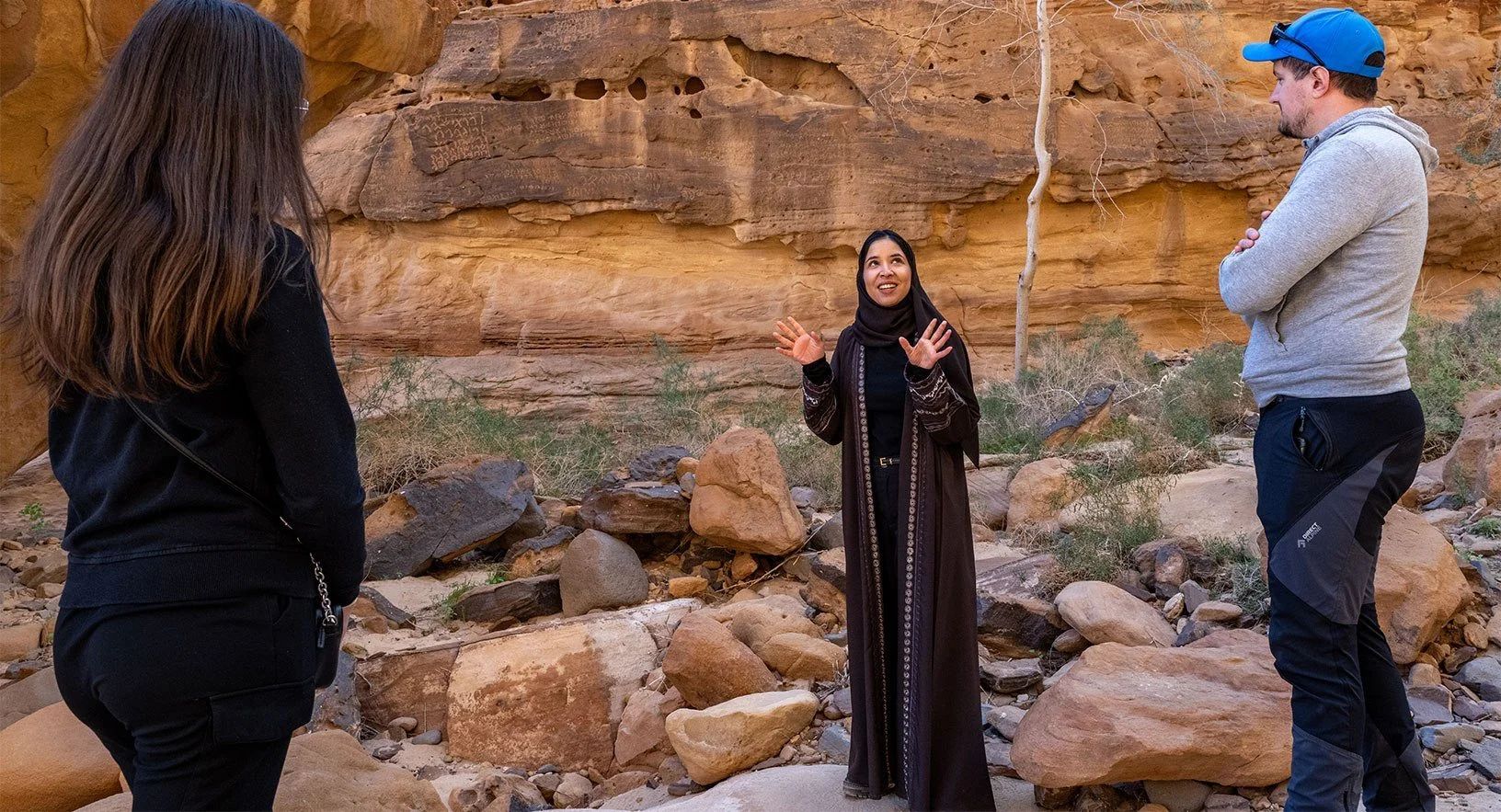
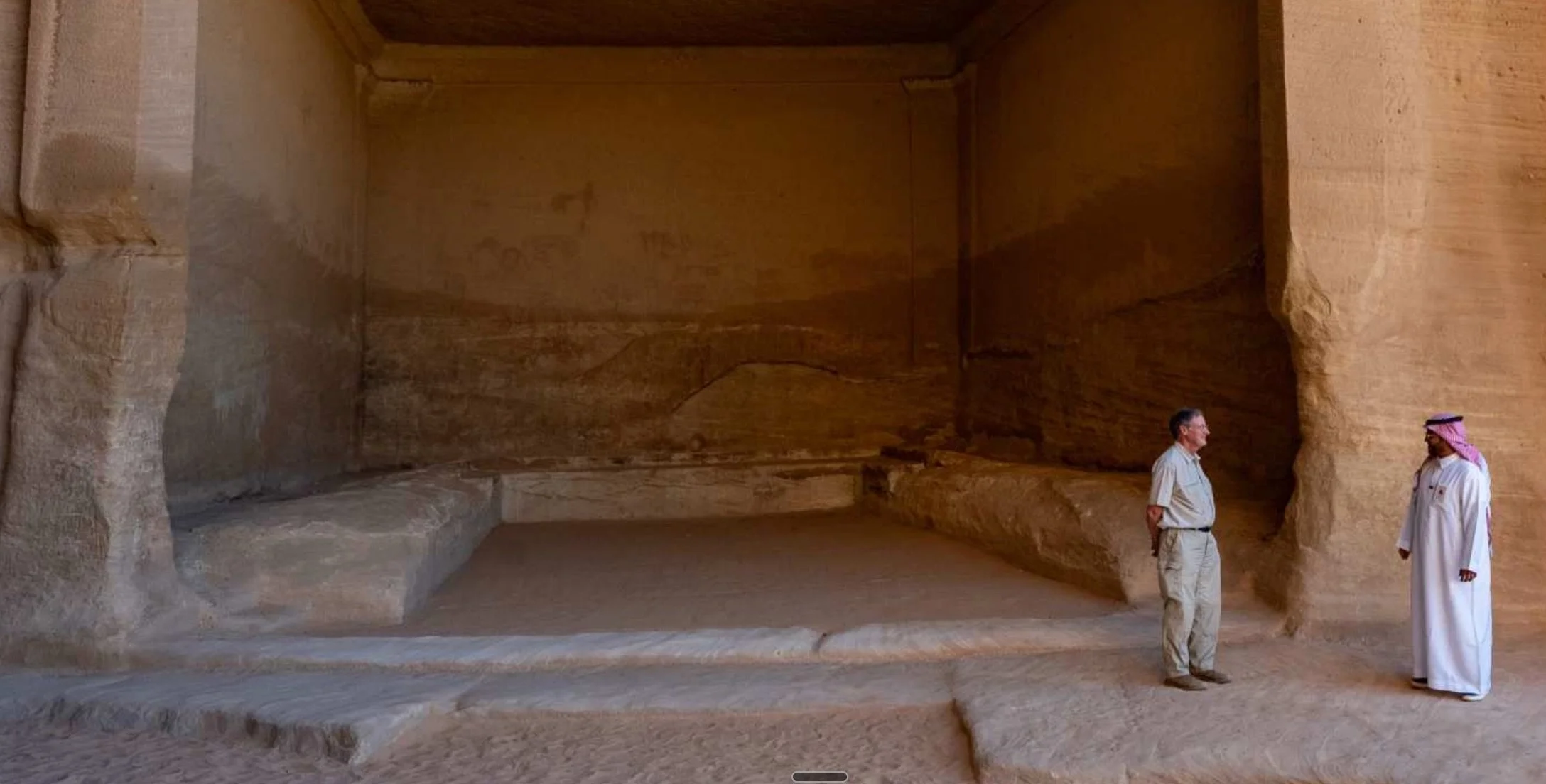
Image by Jabal Ikmah - Rawis sharing the cultural heritage of AlUla, Saudi Arabia. © UNESCO
I recently came across a UNESCO feature about the Rawis of AlUla, Saudi Arabia. They're local storytellers who preserve the region's history through oral traditions, passing down knowledge of the land, its people, and the communities that lived there.
One of the Rawis, Adel Alanzi, grew up listening to his grandparents' stories about ancient pilgrimage routes and the caravans that once passed through the region. Another, Kholouf Alanzi, remembers her grandmother teaching her how to care for the family's palm trees. Their knowledge comes from generations of living in the same place. They know the landscape, the stories, and the people connected to it. They're not learning about their heritage from books or workshops. It's part of their everyday lives.
But what about those of us who grew up somewhere else? In the diaspora, preserving culture often means actively searching for traditions that were once part of everyday life. We might share the ancestry of the people who developed those traditions without necessarily sharing their lived experiences.
Can we still be considered cultural custodians?
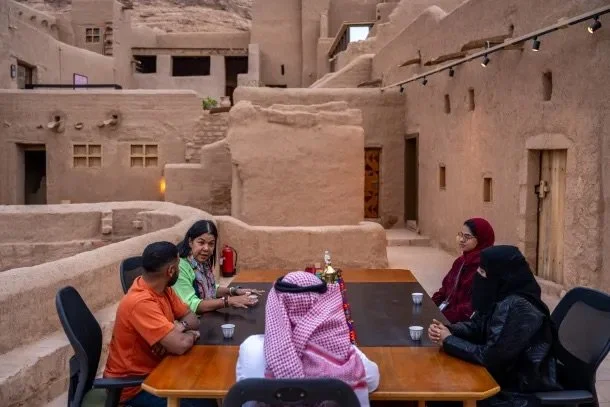
Does cultural custodianship require belonging?
Take phulkari, for example, a traditional form of embroidery from Punjab. Historically, women created these embroidered textiles within their households, often for weddings, celebrations, and other important occasions. However, there's more to phulkari than knowing how to embroider a pattern. Different designs carry regional histories and personal meanings, with some pieces made for particular occasions or passed down within families.
Someone who grew up around phulkari might remember watching their grandmother embroider, recognize certain motifs, or know when a particular textile would be worn or gifted. If you compare that with someone learning about phulkari in a two-hour workshop, they might learn a few techniques and some history, but they won't have the same relationship with the craft. That doesn't make the workshop less valuable. It may be someone’s first introduction to a tradition they eventually spend years learning, or simply something they can recognize and appreciate in their everyday life.
For many of us in the diaspora, this is how we reconnect with parts of our heritage: through workshops, online resources, family stories, or community gatherings. We research traditions that previous generations learned simply by growing up around them. Sometimes, the people in our own families no longer carry that knowledge with them either. Some traditions may survive, while others may become fragmented, adapted, or disappear from everyday life altogether.
So if cultural knowledge isn't always inherited in the same way, does belonging to a community automatically make someone its custodian?
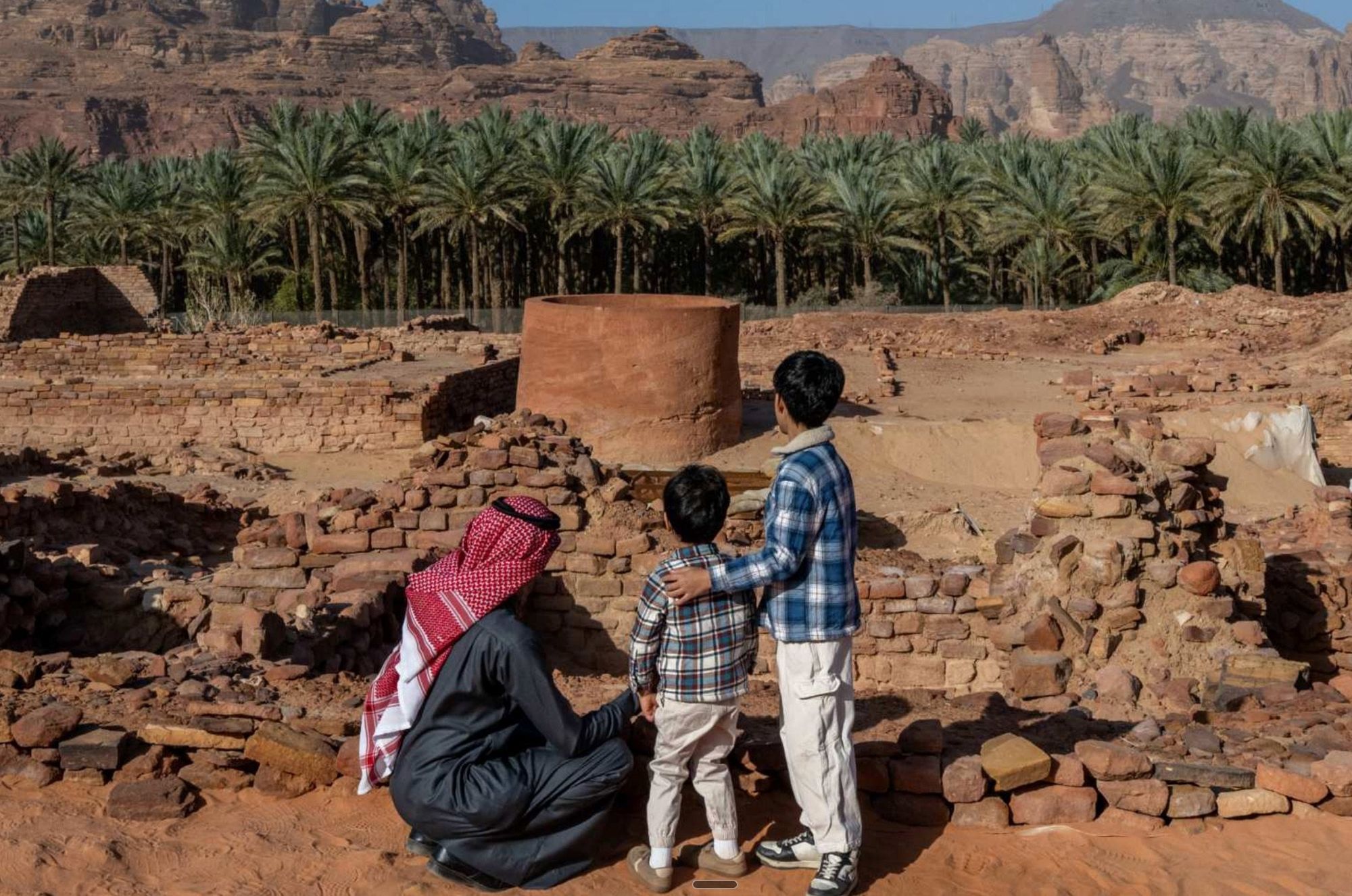
Does cultural belonging equal cultural authority?
We often assume that someone who belongs to a particular culture is naturally qualified to speak about its traditions. While growing up within a community can give someone access to knowledge and experiences that aren't always documented, it doesn't automatically make them an expert in every aspect of their heritage.
Take someone who grew up in a South Asian household but only recently learned a traditional craft, compared with someone outside that community who has spent years studying it directly with experienced artisans. The first person might understand the cultural context in ways the second doesn't, while the second might have a much deeper understanding of the technique itself. In this case, neither the connection nor the technical knowledge necessarily tells the whole story.
The Rawis of AlUla aren't considered custodians simply because they're from the region, but because they carry knowledge passed down through generations and have taken on the responsibility of sharing it. I think a similar distinction matters in the diaspora. Having a connection to a culture gives us a reason to care about preserving it, but that doesn't automatically give us the authority to represent every part of it.
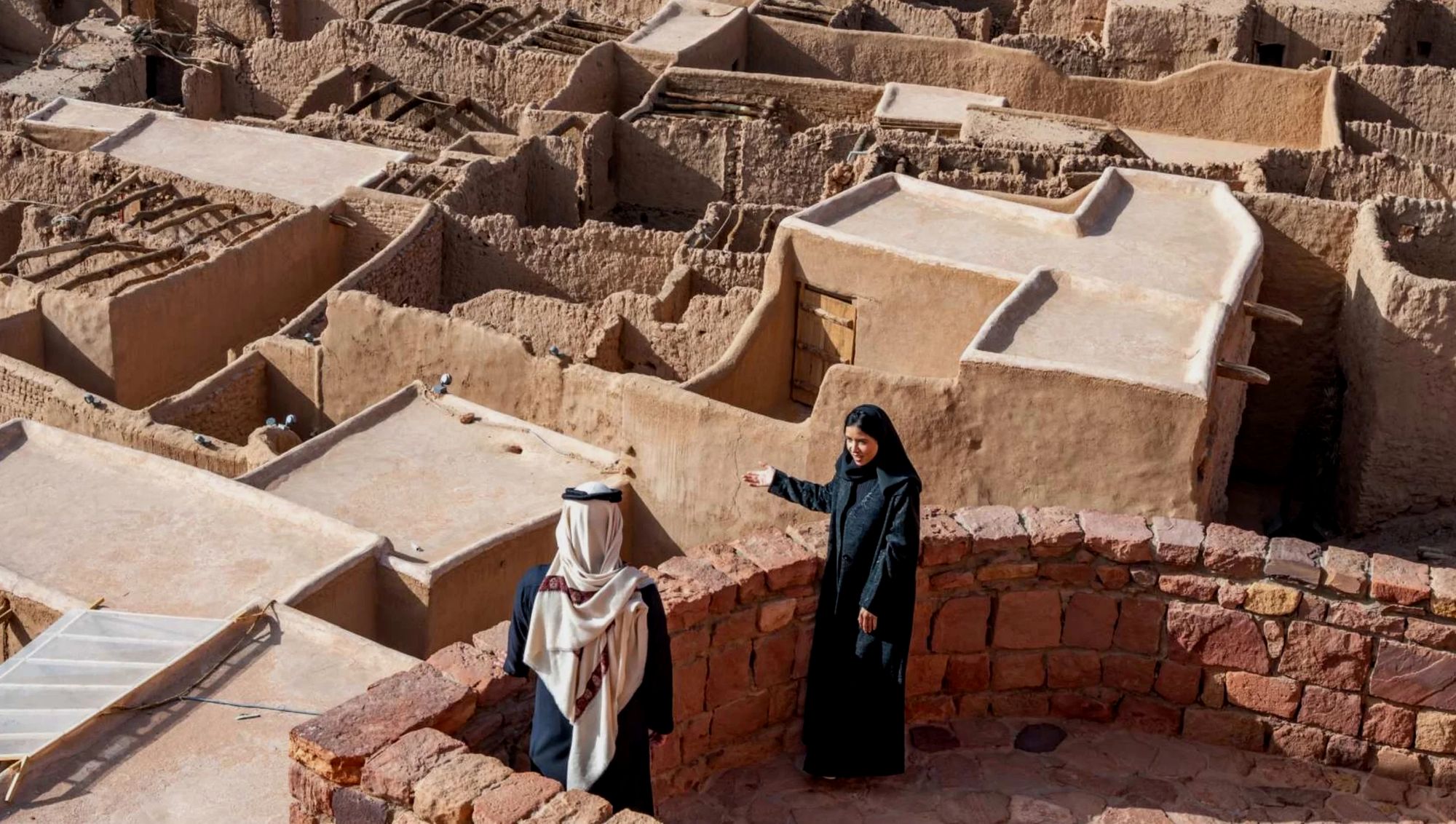
When does cultural preservation become ownership?
The recent disagreement between sari stylist Natasha Thasan and actor Maitreyi Ramakrishnan over a look in Netflix's Best of the Best raises another question for me: who owns a cultural tradition?
Natasha, known for her contemporary sari-draping content, accused the film's team of borrowing her distinctive style without adequate recognition. Maitreyi responded that she had contacted Natasha during filming and that both she and the costume designer had acknowledged her influence. She also pointed to the long history of blouseless sari draping among Tamil communities. The disagreement sparked a wider debate online about whether a traditional draping technique can be claimed as someone's signature style, and what recognition contemporary creators are entitled to.
A recent Harper's Bazaar India article explored a similar question: when someone brings a traditional practice to a new audience, where does popularization end and ownership begin?
Sari draping has existed in different forms across South Asian communities for centuries. But someone who spends years experimenting with those techniques can develop a recognizable style and contribute something distinctly their own. I believe that creative work deserves recognition, just as the traditions and practitioners who inspired it deserve to be acknowledged. The difficulty is knowing where an individual's contribution ends and the inherited tradition begins.
This becomes particularly complicated in the diaspora, where rediscovering and reinterpreting cultural practices can become part of someone's identity, creative work, or even livelihood. A creator might introduce thousands of people to a tradition they otherwise wouldn't have encountered, and I think that contribution deserves recognition. However, popularizing a tradition doesn't automatically give someone authority over it, and I don't think recognition should come at the expense of others being able to participate in their own cultural practices.
There's a difference between asking for credit for your own work and claiming you have ownership over a practice that existed long before you. When that distinction gets blurred, there's a risk of gatekeeping the very culture you're trying to celebrate.
What responsibility comes with sharing culture?
As someone who organizes cultural workshops, I've seen how even a brief introduction to a practice can encourage someone to take an interest in a craft they previously knew very little about. I'm also keenly aware that learning a few techniques is very different from understanding the history, meaning, and cultural context behind them. It's possible to reproduce a pattern without knowing what it represents, or to learn a technique without understanding where it came from.
There's real value in making these traditions more accessible, especially when some are becoming less familiar to younger generations. At the same time, I'm conscious of the risk of reducing cultural practices to something purely aesthetic, particularly when they're adapted for social media, workshops, or commercial products. UNESCO's ethical principles for safeguarding intangible cultural heritage emphasize the importance of involving communities in decisions about how their traditions are maintained and shared.
Not everyone introducing a cultural practice needs to be an expert, but I believe there's a responsibility in how that knowledge is presented. That might mean crediting the artisans behind it, learning directly from practitioners where possible, or being transparent about the limits of our own understanding. These considerations shouldn't be an afterthought.
Who gets to call themselves
a cultural custodian?
The Rawis of AlUla have a direct relationship with the history they're preserving. Their knowledge comes from generations of living within the community, and their responsibility to share it is rooted in that connection.
For those of us in the diaspora, that relationship can look quite different. We might have to actively seek out traditions that were once part of our families' everyday lives, or learn from practitioners outside the communities we grew up in.
I don't think cultural custodianship should be determined by ancestry or geography alone. Knowledge, experience, and a sense of responsibility to the communities behind these traditions should matter too. Yet I also don't think every contribution to cultural preservation needs to come with the title of custodian.
There's a difference between giving a cultural practice a platform and presenting yourself as a flag-bearer of the knowledge and traditions behind it. We can play a meaningful role in keeping traditions alive without necessarily claiming the authority to represent them.
If cultural custodianship is a responsibility rather than a title, who gets to decide when someone has earned it?
All images sourced from © UNESCO.